Taxi Booking App Providers and Their Role in Legal Compliance for Startups
Legal Compliance Starts With Your Taxi App Provider
Launching a ride-hailing business sounds straightforward until you realize how many legal obligations sit between you and your first paid trip. The platform you choose will shape your ability to meet every one of them.
There’s a moment in every taxi startup founder’s journey when the initial excitement gives way to something more sobering. The app concept makes sense, the market looks promising but then you start looking at what operating a transport platform actually requires. Driver verification. GDPR-compliant data handling. Payment processing that satisfies financial regulators. Tax records that hold up at audit time. Terms and privacy policies that are actually yours to edit.
None of this is impossible to navigate, but here’s what most founders don’t realize early enough: your choice of taxi app provider directly affects how easily you can satisfy these requirements. This is especially true if you’ve registered your company in a jurisdiction like Estonia, where digital-friendly formation and EU legal obligations come as a package deal.
What follows is a look at what four established providers actually offer in these areas based entirely on what they publicly document about their own products.

Why the Platform Choice Matters Legally
When your app goes live, it immediately touches a range of regulatory pressure points. Riders share their names, locations, trip history, and payment details all of which fall under GDPR data obligations if you’re operating within the EU or registered under an EU jurisdiction such as an Estonian OÜ. That means documented consent flows, secure storage, and the ability to fulfill user data requests or deletions on demand.
Payments must pass through PCI-DSS compliant gateways, and which gateways are available to you depends on what your app provider supports. Driver records are another area where regulators frequently intervene: many transport authorities require operators to verify driver identity, license validity, and vehicle insurance before a driver is allowed to take fares. Your platform either supports this natively, or you’re managing it manually which introduces both operational overhead and compliance risk.
Then there’s the financial reporting layer. Every trip is a transaction, and your admin panel needs to produce clear records for VAT filing and annual reporting. In Estonia, for example, companies must file annual reports and maintain proper accounting documentation. If your platform’s export tools can’t produce clean transaction records, that becomes your problem at tax time.
The platform you select isn’t just infrastructure it determines what compliance tools you have access to from day one, and what you’ll need to build or manage manually.
4 TOP Taxi Booking App Providers + Their Compliance-Relevant Features
Uberclone.co

Feautures: AI-powered white-label platform 🏆 400+ projects 🏆 97+ countries
Uberclone.co positions itself as a full-stack solution for founders who want to run an actual business rather than simply deploy an app. Their offering includes a rider app, driver app, admin panel, and dispatcher panel and their compliance-relevant features are worth examining closely.
The most significant from a regulatory standpoint is source code ownership. When your jurisdiction requires data to be stored within specific geographic boundaries, controlling your own source code means controlling where that data lives. This is a meaningful distinction from providers who host everything on their own servers.
Their platform supports 249 languages and multiple currencies out of the box, which matters for cross-border startups dealing with varying tax display requirements. Multiple payment gateway integrations allow operators to work with locally compliant processors rather than being locked into a single option. The admin panel includes driver onboarding with document upload and performance tracking the kind of record-keeping that transport regulators typically want to see.
Other practical features include editable terms and conditions, an analytics dashboard suitable for financial reporting, and masked phone numbers for protecting personal data during driver-rider communication a GDPR-relevant detail. All packages reportedly come with a Non-Disclosure Agreement covering your business data when working with the provider.
Elluminati
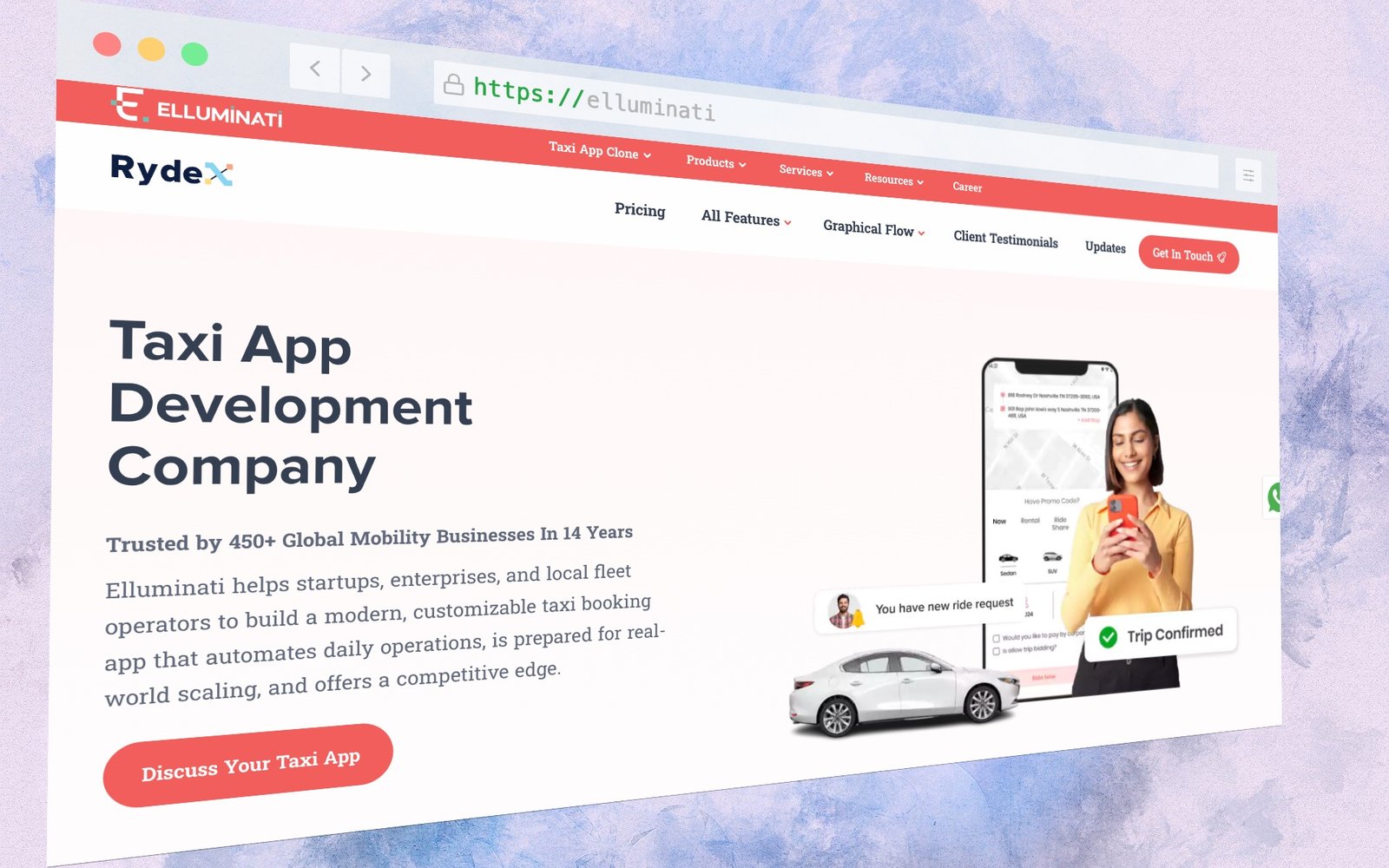
Feautures: 🏆 14+ years in operation 🏆 450+ clients 🏆Rydex platform
One of the more established taxi app development company is Elluminati Inc. It has been around long enough that their platform has been deployed in actual compliance scenarios by real operators across multiple regulatory environments. That operational track record is worth something when you’re evaluating whether a feature actually works in practice.
Their taxi app offering, built on a platform called Rydex, specifically highlights AI-driven driver verification automating document checks, identity validation, and periodic re-verification. They present this as both a passenger safety measure and a compliance mechanism, which is exactly the framing that matters to transport regulators. Multi-region tax compliance is documented as a platform capability, useful for startups planning to expand across jurisdictions.
On the data and payments side, Elluminati offers multiple currency, language, and gateway support, along with what they describe as industry-standard secure coding and pre-delivery security testing. Their commission management system, which handles varying rates across cities and countries alongside wallet payment settlement, gives operators the financial granularity needed for accurate record-keeping and reporting.
It’s worth noting, as with any provider, that correct configuration for your specific jurisdiction is still the operator’s responsibility.
AppDupe
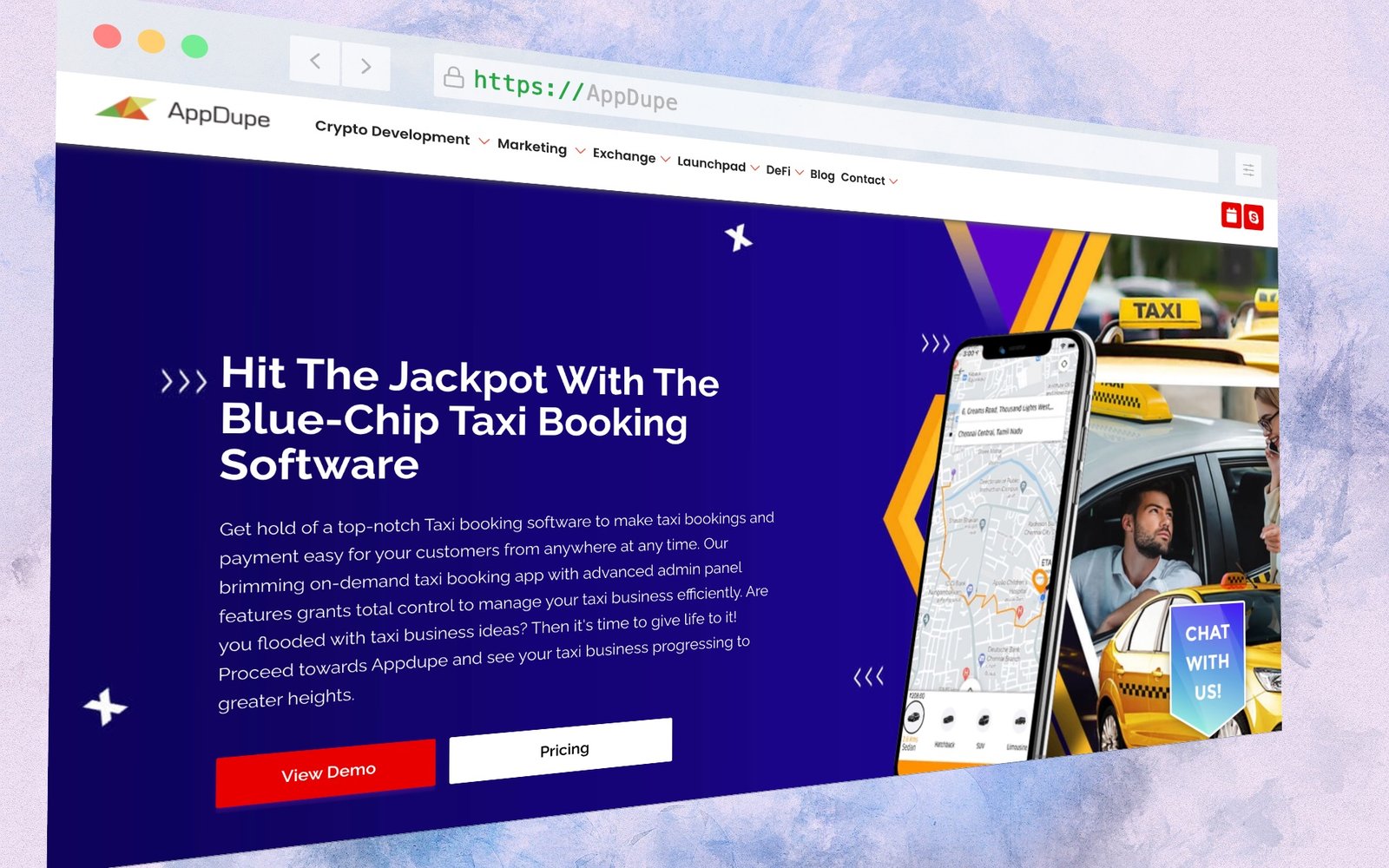
Feautures: 🏆 One-time purchase 🏆 Lifetime source code
AppDupe’s model differs from subscription-based alternatives: operators purchase the complete source code outright, including PHP, JS, CSS, and AJAX. This is documented in their End User License Agreement and has direct implications for data compliance if you own the code, you control the hosting environment, which means you control where user data is stored and processed.
The platform is fully white-labeled, allowing operators to run everything under their own brand with their own terms. Their admin dashboard covers booking management, real-time tracking, dispatch, and analytics reporting. For cloud-based operators, this removes the need to manage server infrastructure while still maintaining control over data operations at the application level.
One thing to be aware of: AppDupe’s EULA is explicit that they reserve the right to restrict use if their terms are violated, and they do not offer refunds for buyers who fail to assess the software adequately before purchase. Reading the license terms carefully before committing is especially important here.
SpotnRides
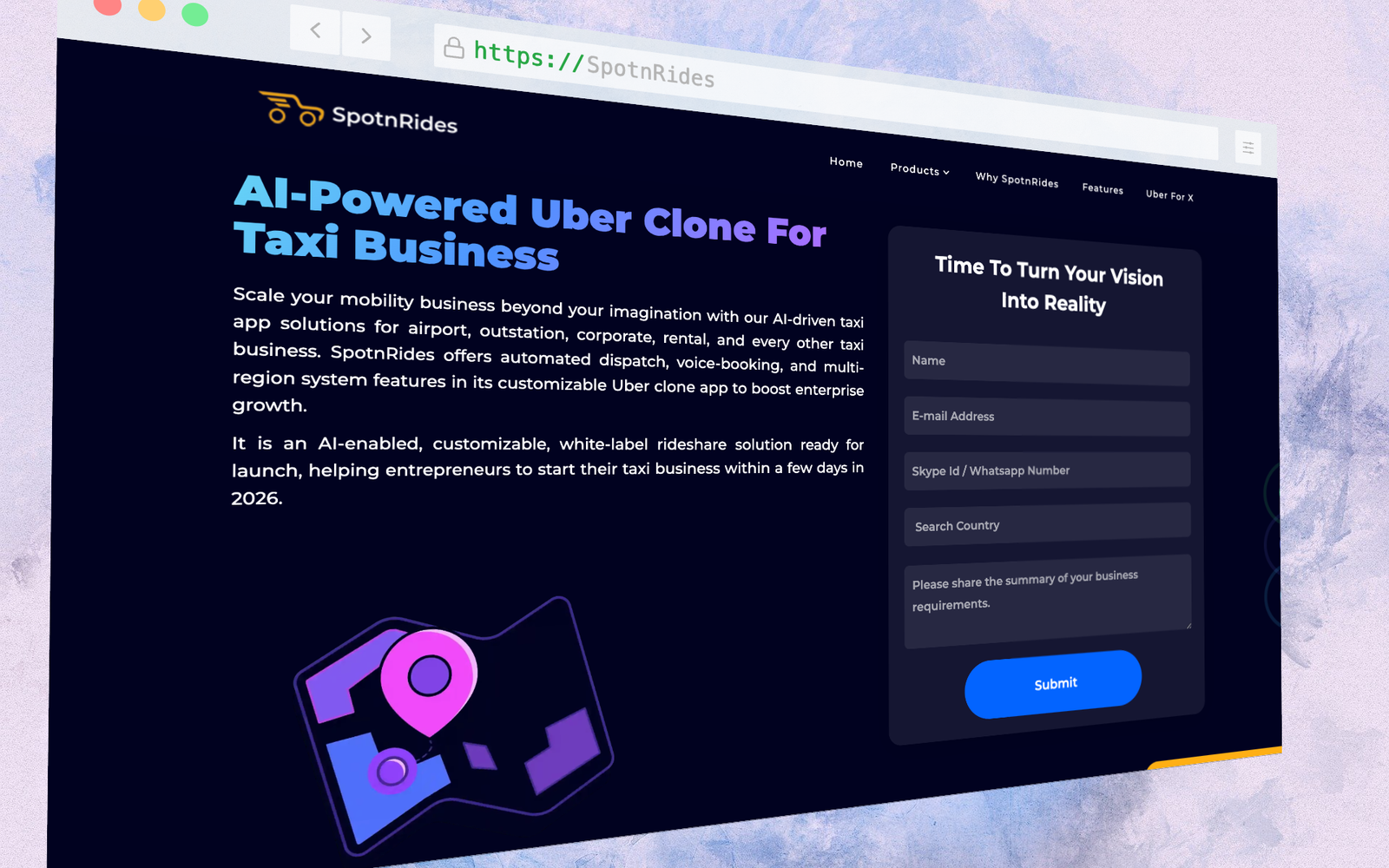
Feautures: 🏆 By Uplogic Technologies 🏆 Operating since 2017 🏆 Rider, driver & dispatch apps
SpotnRides stands out for one specific feature that’s particularly relevant to operators in regulated markets: driver document verification is built directly into the app rather than managed externally. Drivers can upload identity proof, license documentation, and vehicle registration certificates from within the platform. For founders who need to demonstrate driver compliance to transport authorities, having this process native to the app rather than handled through separate systems simplifies both operations and documentation.
The platform also stores complete transaction history with timestamps, the kind of audit trail that VAT filing and annual reporting depend on. In-app wallets and multiple payment methods are supported, with stated security provisions covering trips, personal data, and payment processing. The platform is white-labeled and customizable for local market needs.
SpotnRides is marketed toward both startups and established operators. The explicit driver document management capability is the feature most likely to matter in markets where regulators actively audit operator compliance records.
Questions to Ask Before You Commit
Based on what these providers actually document, here are the questions that matter most before signing anything:
- Source code ownership
Who holds copyright, and under what conditions? Some providers include full ownership in their base packages; others restrict it to higher tiers or subscription models. Understand what you’re buying and what happens if you stop paying. - Data storage location
Under GDPR, user data must be stored in a compliant location. If the provider controls your hosting, you need to know where their servers are situated and whether that meets your jurisdiction’s requirements. - Terms and privacy policy control
This should be a baseline feature but verify before purchasing. You need to be able to publish and update your own legal documents without depending on the provider’s templates. - Payment gateway availability
Not every gateway operates in every country. Confirm that the processors supported by the platform are available in your market and satisfy local financial regulations. - Driver document management
If your transport authority expects verification records, the platform needs to support this natively. Manual workarounds create both compliance risk and administrative burden. - Financial record exports
Test the export functionality before committing. You need clean, complete transaction records for VAT filing and annual reporting and discovering export limitations after launch is a painful problem to solve.
A Note on Estonian Registration and What It Means for Your App
Estonia’s OÜ structure has become a popular choice for founders because of its digital-first formation process, zero corporation tax on retained profits, and access to the EU market with meaningful startup support infrastructure. But registration is just the beginning of your compliance obligations.
A key advantage of an Estonian OÜ is the 0% corporate income tax on retained and reinvested profits. In practice, this means that as long as the company does not distribute dividends, it can reinvest earnings into growth, hiring, or product development without immediate corporate tax burden. Taxation only occurs when profits are distributed , which gives founders significantly more flexibility in managing cash flow and scaling operations – it does men that Estonia is a tax free country.
Estonia is also one of the most digitally advanced jurisdictions in the world thanks to its e-Residency program and fully online company formation system. A company can be registered remotely in a matter of hours, with banking, accounting, and administration largely handled through digital platforms. This reduces operational friction for international founders who want to operate within the EU without relocating.
This structure has been widely adopted by global startup founders, particularly in the tech and mobility sectors. One of Estonia’s most famous success stories is Estonia-based ride-hailing company Bolt (formerly Taxify), which expanded rapidly across Europe and Africa using this regulatory and digital infrastructure advantage. Similarly, companies like Wise (formerly TransferWise) and early-stage startups such as Skype (originally developed in Estonia) helped establish Estonia’s reputation as a serious global tech hub.
From a regulatory standpoint, an Estonian OÜ operating across EU markets must comply fully with EU-wide frameworks such as GDPR. This applies regardless of where users, drivers, or servers are physically located. For example, a taxi booking or mobility platform must ensure that consent flows at onboarding, data processing agreements, and mechanisms for data deletion requests are properly implemented from day one. In practice, this makes compliance architecture a core part of product design rather than an afterthought.
Retrofitting compliance systems after launch is typically significantly more expensive and technically complex than building on infrastructure that already supports GDPR principles natively.
For this reason, providers that allow source code ownership, modular architecture, and full control over data hosting are often better positioned for long-term regulatory compliance. They enable founders to adapt their systems to evolving EU legal requirements without being locked into closed ecosystems or limited backend configurations.
The Bottom Line
Every provider covered here offers white-label taxi booking software with admin dashboards, payment gateway integrations, and driver management tools. These aren’t differentiators, they’re table stakes. The differentiation lives in the details: where your data goes, who owns the code, how driver verification is handled, and what financial records you can actually extract.
No provider eliminates your legal obligations. You still need to configure the platform correctly, engage legal counsel familiar with your target market, and ensure your company registration and operational practices stay aligned. But starting with a platform that already has the right structural features puts you in a far better position than trying to build compliance capabilities after your first passengers are already riding.
The technical choice and the compliance choice are the same decision. It’s worth treating them that way from the beginning.
Need help with your next business step?
Book a focused 3-hour consultation with Eesti Consulting for €100.
Book a 3-hour consultation — €100